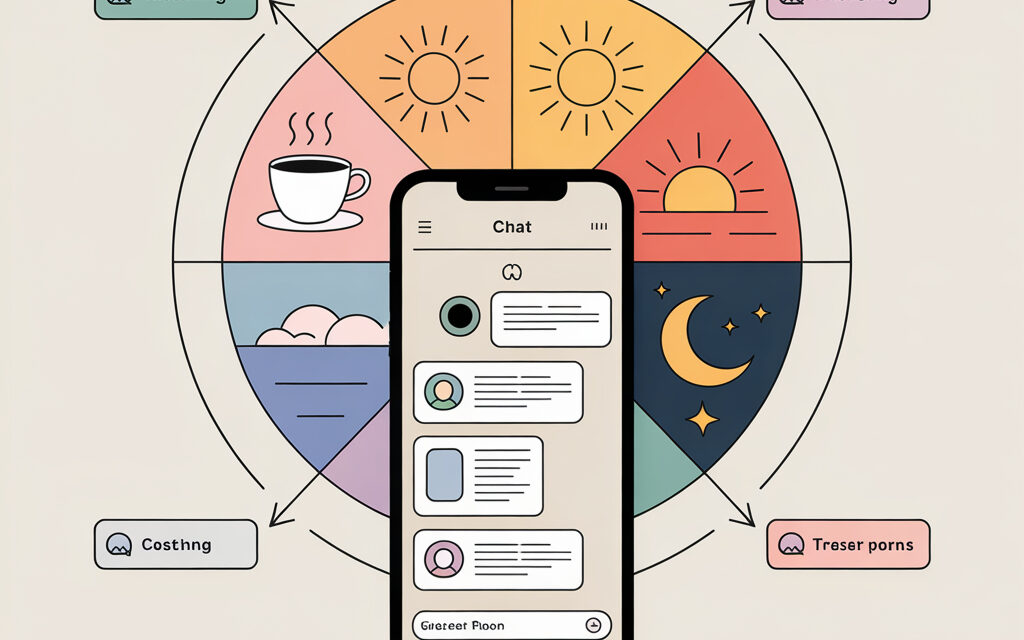
Let’s keep it simple. We all live at different paces: some read in the morning with coffee, some scroll through feeds at lunch, and some hang out in the evening. I’ve gathered calm and clear steps on how to adjust the format and tone of your posts for the time of day, without turning it into a stressful race.
No jargon or strict rules. Just real observations, simple checks, and a few short stories.
The Short Answer
In the morning, offer something light and useful; in the afternoon – short and practical; in the evening – stories and engagement. Rely on Telegram stats and your time zone, do small A/B tests, and note down simple conclusions. Scheduled and silent messages help avoid waking people up and keep the pace.
Why Even Think About Adapting Content for Different Times of Day on Telegram
The best time to post is often different for each audience, and post timing affects views, reactions, and saves. In the evening, people lean towards stories; in the morning – towards short tips; in the afternoon – towards practical checklists. I’ve noticed that small tweaks to tone and text length have a bigger impact than complex schemes.
Another point – different time zones. If some of your readers are in Kyiv and some are in Europe, you need to choose your posting time gently, without sudden changes. Usually, it helps to keep one main slot and one additional one – for a “second wave.”
How to Figure Out Where Your Audience Is and What Time Zone They’re In
Telegram channel statistics show activity peaks, views, and retention – that’s your foundation. Look at when views grow in the first 2 hours, when reactions are added most often, and when people respond to polls. That’s your live activity heatmap.
A Simple Way to Check
Set up three test slots for a week: morning, lunch, evening. Each day, change only the time, keeping the format and length the same. Compare the first 4 hours: views, reactions, clicks. You’ll immediately see your best spot.
A Mini Story About Time Zones
A friend of mine had subscribers split between Kyiv and Warsaw. He spent a long time trying to find the perfect slot and ended up keeping 8:30 for the “morning crowd” and 19:15 for the “evening crowd.” He kept the same format but changed the tone: shorter in the morning, a bit warmer in the evening.
What to Publish in the Morning, Afternoon, and Evening Without Complex Schemes
Different times of day call for different formats. Morning loves useful short posts and checklists, afternoon works for quick instructions and polls, evening is for stories, reviews, and a conversational tone. If you want to experiment, do it in small doses – one new format per week.
| Time | Goal | Format | Tone | Example |
|---|---|---|---|---|
| Morning 7:30-9:30 | Smooth start to the day | Short text, checklist, photo carousel | Calm and very specific | “3 steps to get a post published by 10:00” |
| Afternoon 12:00-14:30 | On-the-go practice | Instruction, note in 5-7 lines, poll | Business-like, no fluff | “Quick cheat sheet for covers: what’s visible on a phone screen” |
| Evening 18:30-21:30 | Engagement and dialogue | Story, breakdown, mini-video | Warm, conversational | “That time I mixed up the posting time and what came of it” |
| Night 23:00+ | Niche or “silent” broadcast | Silent messages, long breakdowns | Leisurely | “Save for morning: a toolkit for your content plan” |
A Story About Evening Tone
Once, a long breakdown in the evening performed better than one in the afternoon. Same text, but a bit more warmth in the intro and a request to share one thought in reply. Comments were twice as many as usual.
How to Test Hypotheses Without Burning Out
Many face the urge to test everything at once: A/B tests, different covers, new timing. In my opinion, it’s better to test one hypothesis at a time – just the posting time or just the tone. That way you’ll understand what exactly worked, and your Telegram stats will be cleaner.
A Mini 2-Week Cycle
- Week 1 – test timing: morning vs. evening.
- Week 2 – on the winning time, test format: short text vs. story.
- Look at the first 4 hours after posting, reactions, and saves.
- Note down one simple conclusion and add it to your content plan.
Is Night Content Needed and How Not to Wake People Up
Sometimes night posts work for very niche audiences or a global time zone. If you decide to try, use silent sending in Telegram – subscribers will see the post in the morning, and no one gets woken up at night. Roundups and long texts that are easy to save work well.
How to Test a Night Slot
Schedule one silent post a week at 23:30. After a month, see how many people read it in the first 8 hours and by what time the graph evens out. If the peak is still in the morning – just keep that format for the morning.
How to Adapt Formats to the Time of Day
Format and tone are often more important than the exact time. In the morning, keep text to 4-7 lines; in the afternoon, add mini-instructions and polls; in the evening, leave room for stories and replies. Videos are shorter during the day, longer in the evening when people have more time.
Polls and Reactions
A poll at lunch helps liven up the channel, and reactions in the evening help continue the conversation. I’ve noticed that one short question at the end in the evening gives noticeably more feedback.
How to Adapt Your Content Plan When Material is Scarce
Repackaging saves the day when ideas are few. One evening breakdown can be turned into a morning checklist the next day, and a week later – into a short video. This isn’t cheating, it’s a normal cycle: different format for different times of day.
A Simple Repackaging Template
- Long story in the evening – next day a morning checklist.
- Instruction in the afternoon – on the weekend a mini-video with the same steps.
- Poll in the evening – on Monday a summary with conclusions.
How to Automate Without Losing the Human Touch
Scheduled messages in Telegram help keep a rhythm, especially if your audience is in another time zone. But a live touch is also important: sometimes it’s better to manually tweak the intro if something has changed in the news or weather. The balance is simple – plan the foundation, do the final touches manually.
Where to Read About Stats and Tools in Telegram
It’s useful to check out official sources: Telegram’s post on channel stats and a general overview of global digital habits from DataReportal. This helps keep a finger on the pulse and compare your gut feeling with data.
A One-Week Checklist
- [ ] Chose 2 slots: morning and evening.
- [ ] Prepared 3 posts of the same format – only changing the time.
- [ ] Watching the first 4 hours: views, reactions, saves.
- [ ] Making one conclusion – noting it in the content plan.
- [ ] Repackaged one evening post into a morning checklist.
- [ ] Tried silent sending once after 23:00.
- [ ] Asked the audience what time is more convenient for them to read.
Micro-FAQ
If my channel is small, will stats help?
Yes, even with small numbers, you can see where views and reactions grow faster. Look at relative differences, not “big numbers.”
How to figure out the best time without complex analytics?
Do 6-8 posts in different slots and compare the first 4 hours. That’s the simplest and most practical guide.
Should I delete posts that “didn’t perform well”?
Usually not. Better to update the format, and pull a clear lesson from the weak post – it’ll come in handy later.
Do I need to post every day?
Not necessarily. Consistency is more important than frequency. Even 2-3 quality slots a week can work great.
Can I repeat the same post in the morning and evening?
You can gently repackage: change the title, cover, and presentation. It’s better not to send direct duplicates.
Key Takeaways from the Article
The time of day affects how people read and react. Keep two favorite slots, adapt the format to the daily rhythm, and test one hypothesis at a time. Repackaging saves energy, silent sending shows respect for people’s time, and stats provide a calm foundation.
If you want – share how it went for you
I’m curious which slot turned out to be your working one and which format resonated more – the morning checklist or the evening story.
Glossary
- Slot – chosen posting time.
- Repackaging – presenting the same core idea in a different format.
- Silent sending – posting without a sound notification.
- Activity heatmap – visible distribution of view peaks.
- Reactions – quick emoji responses under a post.
- Saves – when a reader saves a post “for later.”
- A/B test – testing two variants, changing only one parameter.
- Content plan – a simple schedule of what and when you publish.
- Scheduled post – a post planned in advance.
- LSI queries – semantically related phrases that people actually use.