
Facebook has announced a series of updates to the News Feed layout and ranking systems as it tries to make Facebook feel relevant again in a changing social landscape.
First, Facebook wants to make the main feed “simpler and more visual” by updating multi-photo posts and adding simplified “like” and “expand” options that you can trigger by tapping any image.
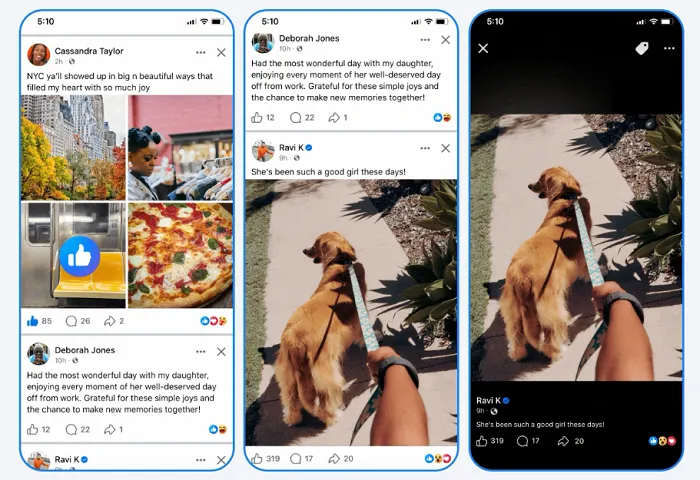
Now, when you upload several images in one post, they will be arranged in a standardized grid, and users will be able to double-tap any image in the set to like it. Feed content will also expand to full screen when tapped.
If you share photos regularly, changes like this usually bring back an old pain point: the image can look fine in your gallery, but suddenly appears brighter in the feed and loses the contrast you intended. This is especially noticeable in Instagram and it has specific causes and quick fixes: Why does Instagram brighten photos.
Meta is also trying to make it easier to access the features you use most often:
“Soon the Facebook features you use the most in the tab bar – such as Reels, Friends, Marketplace and Profile – will appear in the center of the tab bar so you can access them more easily. You will also see a refreshed menu design and clearer in-tab notifications to help you stay on top of the latest on Facebook.”
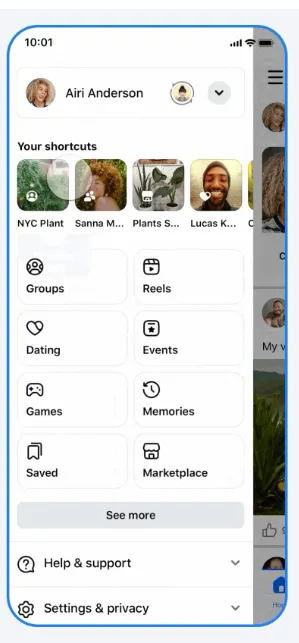
Most people probably navigate Facebook via the bottom function buttons, but the idea here is to give you another way to quickly switch between key elements, with more options accessible inside tabs.
Facebook is also updating how search results are displayed so that content appears in “a more intuitive grid layout that supports all content types”.

As search and feed become more visual, the caption under a photo stops being a formality – it starts acting as a meaning anchor and a reason to open the post, especially when there are many similar thumbnails in the grid. If you need to quickly recall practical caption patterns without fluff: How to caption a photo on Instagram?.
This offers a more visual approach to discovering content that fits the general full screen, immersive direction of these updates.
Facebook says it is also testing a new full screen viewer that will let you browse different photo and video results without losing your spot in the search results. The new option is expected to roll out in the next few months.
And here is a practical point – if you are preparing posts from a laptop, it is easier to assemble visuals, captions and frame order in one go instead of redoing everything ten times on your phone. For Instagram this is basically a standard workflow, and here is a step by step guide on how to publish from desktop: How to make a new Instagram post from a computer.
Facebook also plans to add in-feed controls to fine tune video recommendations, similar to what Instagram and Threads are testing.
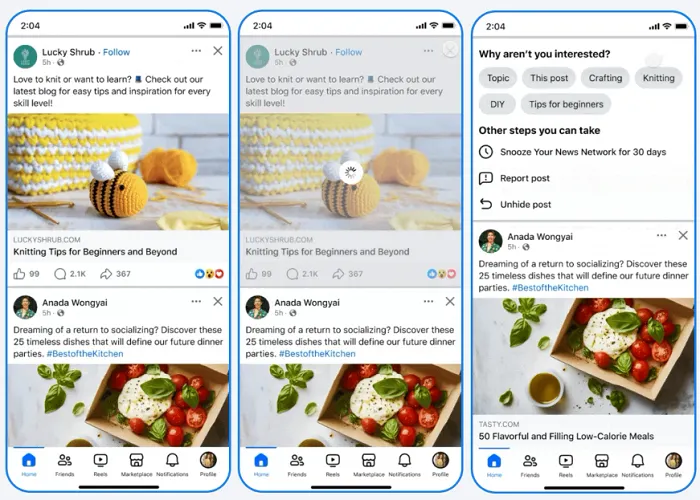
As you can see in the example, Facebook is adding new topic options when you tap the X next to a post in the feed so you can indicate why the post is not relevant, including topic level signals.
Until now you only saw “snooze” and “report” options, but now you will be able to give the Facebook algorithm more direct feedback on what you want to see more or less often.
This is another experiment in manual algorithm tuning that gives users more control over how they experience the app. Facebook says it is also testing other algorithm controls that will start rolling out next year.
Facebook is also trying to make posting more intuitive by surfacing the most popular editing tools as a final step in the composer.
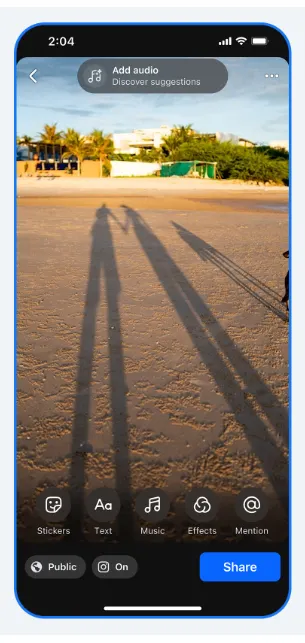
As you can see in the example, Facebook now adds overlays with some of the most popular post editing options on the last screen before publishing, which could nudge more people to add more detail to their updates.
In practice this pushes you toward more thought out posts – not just “upload a photo and leave”, but putting together intent, structure and delivery. At that point it is not only about the interface, but about who on your team actually owns the copy and tone of voice: What do you call the person who writes Instagram posts.
This is closer to Instagram’s approach than traditional Facebook, but given that people spend more time on Instagram, it might be a smart way to encourage more sharing.
The comments system is also getting an update: “replies are easier, badges are more visible and there are new tools to pin comments, making it easier to follow conversations.”
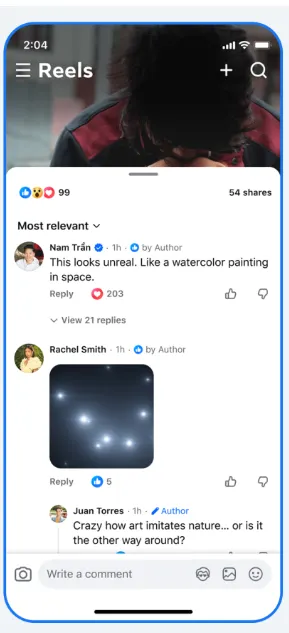
Features like this are usually built for engagement, but in practice the most valuable signals are not likes but “quiet” signals like saves – they show that content is genuinely useful rather than just scrolled past. If you care about understanding saves specifically in Instagram and what you can actually see there: How to see who saved your photo on Instagram.
Finally, Facebook is trying to improve the process of finding people by suggesting friends based on shared interests:
“For example, if you update your profile to say you’re into sourdough bread baking or planning a trip to Nashville, Facebook may show you friends who can share tips on your sourdough or recommend the best local spots.”
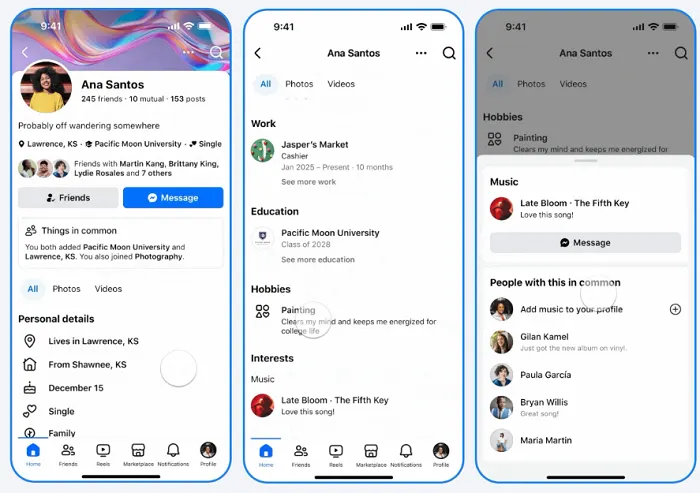
So instead of building connections primarily around people you already know, Facebook will also try to match people based on interests. That sounds a bit risky, because Facebook can unintentionally connect you with unpleasant types. But the idea is to help expand your circles and build community around shared interests and hobbies.
I am not fully convinced this is a good direction for Facebook given that it has no real way to vet those connections. But it is clear that Facebook is trying to boost engagement by giving people more ways to connect and talk inside the app.
Because while Facebook is still the most used social network in absolute terms, with more than 3 billion active users, most social media users do not spend most of their time there.
TikTok, YouTube and Instagram are winning on time spent thanks to their addictive short form videos that keep people scrolling for hours and filling every spare moment. People still open Facebook daily to check whether family or friends have posted anything, but they do not interact on Facebook as actively as they used to. That is probably why Meta is looking for new ways to reconnect people and draw more attention back to the app.
The updates presented here line up with these new user behavior patterns, although, again, trying to connect strangers based on shared interests can lead to various types of negative outcomes.
In most cases that will not happen, of course, but even if some people are harmed as a result, that still feels unacceptable.
I suspect Facebook would counter that people already interact in groups, so what is the difference? I would argue the difference is that joining a group implies a certain level of initiative and engagement, while members also have to follow group rules to remain part of that community.
What is stopping someone from filling out their profile with random interests so that Facebook recommends them as a potential match? And because Facebook is the one making the recommendation, people may assume there is some level of safety that actually is not there.
Maybe this is an overly deep read on the downside risks, but overall the changes match evolving user behavior patterns and could bring useful improvements to your Facebook experience.
UPDATE (12/10): Meta says the suggested connections feature will apply only to friends with shared interests, not to all users, which addresses the main concerns raised here.