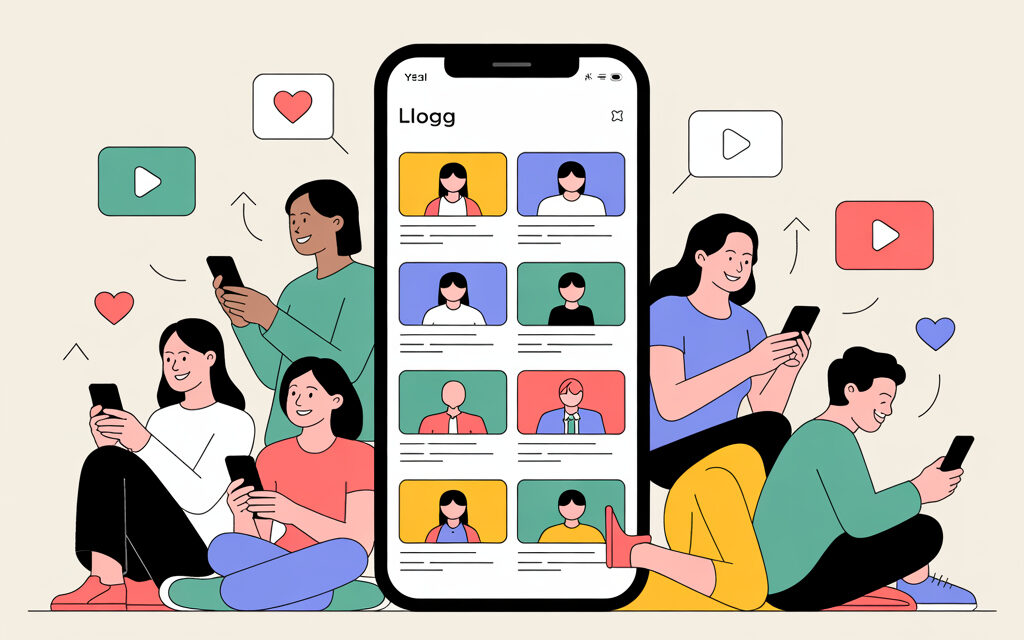
Short videos, quick recommendations, and the feeling of live interaction—that’s what hooks people. In this article, we’ll calmly break down why the For You feed is so compelling, how the algorithm helps beginners, and how to check if your attention is getting overloaded.
There will be a few personal observations, a couple of everyday stories, and simple steps, without complex terms or rushing.
The Short Answer
TikTok is popular because it quickly shows you what interests you, and it’s convenient to watch on the go. Short clips, music, trends, and simple filming tools make it easy to get started. The feed adapts to your style, so it feels like it’s reading your mind.
Why TikTok Is Popular (So Popular, People Watch It) Right Now
A few things have come together: short videos, a smart recommendation algorithm, music-based trends, and easy filming right on your phone. The For You feed offers personalization, hashtags help with navigation, and attention retention grows due to pace and editing cuts. In Ukraine, many watch it on the way, on a break, between tasks—when they want to quickly switch gears.
Algorithm Without the Mystique
The algorithm notices not just likes, but also what you watch till the end, rewatch, pause on. A few such signals—and the feed gradually builds your “interest profile.” I’ve noticed that if you watch recipes more often for a couple of days, the platform starts throwing cooking videos one after another.
Short Format Fits the Day’s Rhythm
Many find that they leave long videos “for later,” but 15-60 second clips are instantly appealing. A short clip has intrigue in the first seconds, a bit of usefulness or humor—and you quickly feel a sense of completion. This feeling of a “quick result” is pleasant, so your hand reaches to scroll further.
What Makes the Feed So Addictive
The feed is endless, and every swipe is like a small lottery. Tutorials, memes, music, challenges alternate, and your brain wonders what’s next. Add comments, duets, and reactions—and you get the feeling of a live conversation, even though you’re just holding your phone.
A Friend’s Story Without the Drama
A friend of mine had this: he watched evening movie reviews, and in the morning—breakfast recipes. After a week, For You subtly separated these by time of day. He hadn’t followed anyone specifically—the feed just adapted.
Little Hooks at the Start
A clear start usually helps: a question, a promise of a result, an unexpected shot. If it’s clear in the first seconds why to keep watching, retention grows on its own. I once filmed a series of short tips on working with notes and started with “Here are three things that save me 15 minutes in the morning”—and people found it easier to watch till the end.
How the Recommendation Algorithm Works for a Beginner in Simple Terms
If you’ve just joined, the platform tests your videos on a small group of viewers. It looks at retention, reaction, comments, watch-throughs, and if the signals are good—it expands reach. That’s why a short clip with no followers can easily land in recommendations.
What to Do in the First Days
Try 3-5 clips on different topics, but in a consistent style. Change the first seconds, music, delivery—see what gives better retention. Often this works: one clear thesis, one example, one takeaway.
Hashtags and Captions Without Fanaticism
Hashtags help the algorithm understand context, but they’re not magic. In my opinion, 3-5 precise tags and a clear caption are better than long chains. The viewer is still the main signal—whether they watch through or not.
Why Clips Get Views Even Without Followers
Here, recommendations are built more from viewer interests than from your follows. The algorithm tests the reaction on different audiences and can show the video to people who’ve never heard of you. So a new creator doesn’t necessarily need to build followers first—you can land in a trend or niche.
A Reader’s Mini-Story
A reader wrote that they uploaded a clip with a greens-storage hack; they had 12 followers, but the clip got tens of thousands of views. What worked was a simple demonstration in the first 2 seconds and a clear result at the end.
The Initial Push
Clear sound, light from a window, and a vertical picture without shadows help. Music from a trend adds a chance, but more importantly, the meaning should be understandable without text or sound—many watch without headphones.
Where Creativity Fits In and How to Film Without a Studio
The app has music, filters, effects, a timer, subtitles. This simplifies editing and makes short content quick to create. For Ukraine, it’s convenient: you can film on the way, in a cafe, in the kitchen—without expensive equipment.
A Simple Setup
A phone, light from a window, headphones as a lapel mic, and a small tripod—usually that’s enough. A three-step script: hook, essence, conclusion. Have 2-3 backup takes—it gives peace of mind.
A Personal Note
I’ve noticed that a series of 5 short clips on one topic does better than one long one. People find it convenient to watch in pieces and come back to the ones they found useful.
How to Know If Everything’s Okay with Attention and Safety
Short videos are energizing, but it’s easy to get overloaded. If you feel tired, you can adjust time or comment filters. The app has tools for limiting screen time and setting privacy—this reduces noise and random negativity.
Gentle Settings That Usually Help
Set a reminder to take a break, hide notifications at night, limit autoplay sound. Only follow people who give you energy. And don’t be afraid to periodically clean your feed—the “Not interested” button works.
How to Check Yourself
A simple test: after 10 minutes of watching, you have a thought you want to apply, or just a desire to keep swiping. If the latter repeats, take a short offline break—water, air, quiet.
Checklist: Is the Short Video Format Right for You?
This list will help you check yourself without numbers and stress. We’ll focus on feelings, delivery, and time.
- It’s easy for me to formulate a thought in 15-45 seconds.
- I understand what “hook” to say in the first 2-3 seconds.
- I have 2-3 topics I can talk about for weeks without getting bored.
- I’m ready to film on my phone without perfect visuals.
- I have 30-60 minutes a week for filming and 15 minutes for editing.
- I perceive comments as dialogue, not as judgment.
- I can calmly take a break and not worry about “the algorithm.”
Table: How TikTok Differs from Reels and Shorts
Subjectively, based on feelings from talking with readers. This isn’t absolute truth, but everyday observations.
| What Matters | TikTok | Instagram Reels | YouTube Shorts |
|---|---|---|---|
| Recommendation Algorithm | Strong focus on interests and retention | More tied to your follow circle | Often pulls from your channel’s topics |
| Music & Trends | Trends emerge quickly | Takes popular tracks from the feed | More universal sounds |
| In-App Editing | Convenient effects and subtitles | Basic functions, sometimes limited | Simple, but better through external editing |
| Clip Length | Short clips up to 60-90 seconds are more comfortable | Similar, but pace is a bit calmer | 20-40 seconds do well |
| Reach Momentum | Sharp spikes without followers | More stable within your audience | Can “carry” clips for weeks |
| Comments & Duets | Active duets and reactions | More classic comments | Depends more on the channel’s niche |
How to Avoid Burning Out If You Want to Film Regularly
Publishing frequency is a matter of habit. Most often, this works: a small rhythm you can definitely sustain, plus one topic you genuinely love. Two stable clips a week are better than 10 at once and silence for a month.
Mini-Plan for a Month
Week 1—searching for an idea and hooks. Week 2—testing format and length. Week 3—reinforcing what’s best. Week 4—a calm pause and analyzing what you yourself enjoyed rewatching.
Where to Read More and Stay Calm
If you’re interested in media consumption and short videos, you can check out the Pew Research Center—they have many studies on viewer behavior. For safety settings and screen time, it’s handy to look at the help section on TikTok Safety.
Micro-FAQ
A few quick answers to common questions.
- Does clip length affect reach? — Yes, but not directly. Watch-throughs and the first seconds are more important.
- Are hashtags needed? — They help understand the topic, but won’t save a boring clip.
- How often to publish? — In my opinion, it’s better to post 2-3 times a week consistently than in bursts.
- Can I do it without dances and trends? — Of course. Explanations, mini-reviews, recipes—everything lives.
- What to do if the feed becomes toxic? — Click “Not interested,” clean up your follows, turn on word filters.
Key Takeaways
TikTok is popular not because of magic, but due to a combination of short format, smart recommendations, and simple tools. Beginners can get views without huge followings if they start clearly and hold the thought. Take care of your attention, customize your feed for yourself, and choose a rhythm that supports, not exhausts.
If You Want—Share How It Went for You
If you want—tell us which format worked best for you and what helped you avoid burnout. It’s interesting to see what works in your real life.
Glossary
- For You — personalized recommendation feed.
- Hashtag — a word with a #, helps understand the clip’s topic.
- Trend — a repeating format, sound, or idea others pick up.
- Retention — how long a viewer watches the clip.
- Reach — how many people saw your clip.
- Duet — a video reaction side-by-side with the original.
- Challenge — a task or theme suggested for others to repeat.
- Hook — the first seconds that promise meaning or a result.
- Editing cut — a quick transition between shots.
- Screen time — how many hours a day you spend in the app.